
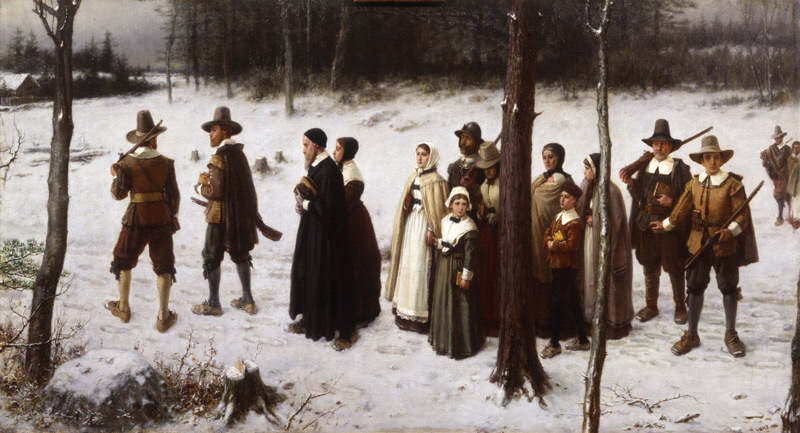
In 1629 King Charles I granted the Massachusetts Bay Company a Charter entitling colonists who would settle there all “Liberties and immunities of free and natural Subjects” within England. The King’s ministers had assumed the company would hold its meetings in London but they moved to Massachusetts, thereby freeing themselves somewhat from English control. Within that Colony Puritans broke into two large religious factions. Presbyterians insisted upon central supervisory control over local congregations – a hierarchy with uniform practices imposed from above. The dominant Congregationalists, however, held that each local church was its own highest authority. A colony-wide meeting of ministers could issue recommendations for uniform practices, but unlike a Presbyterian synod it had no authority to bind localities.
Thus local autonomy with voluntary submission to central recommendation from the outset became a deep-seated tendency in New England.
 Father Anonymous
Leave a comment